Love, Sex & Human Rights: Dr. Karyn Harvey on Why Connection Must Be at the Heart of Support

As Featured On: CBC Saskatchewan Morning Edition – October 2025

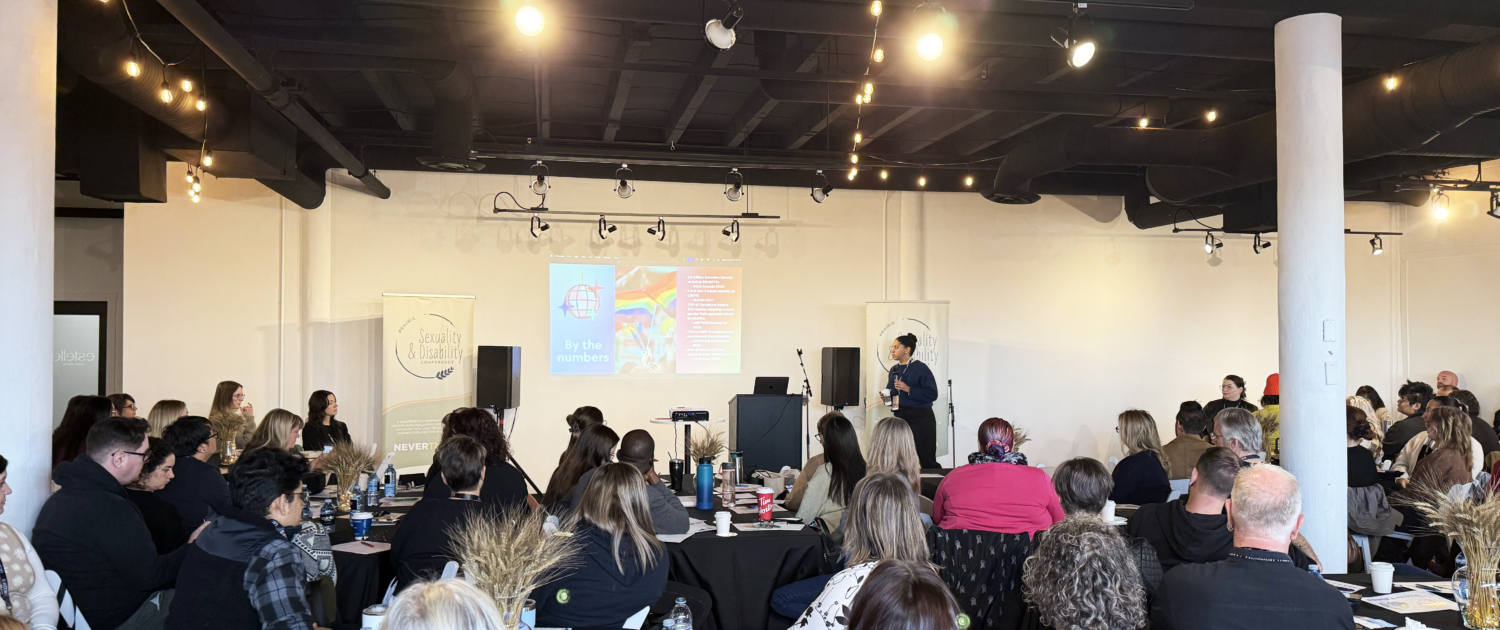
The Prairie Sexuality & Disability Conference – and Dr. Karyn Harvey’s keynote on love, relationships, and human rights – was recently featured on CBC Saskatchewan’s The Morning Edition with host Adam Hunter.

🎙 CBC Saskatchewan – The Morning Edition

“U.S. psychologist says Regina non-profit trailblazing sexual health approach for those with intellectual disabilities


At this year’s Prairie Sexuality & Disability Conference, day two keynote speaker Dr. Karyn Harvey delivered a deeply moving and hopeful message grounded in humanity, connection, and rights. Her session, Love, Sex, and Human Rights, invited attendees to re-examine the way support is structured and to centre something essential: every person deserves real love, real intimacy, and real belonging.

Dr. Harvey opened with a powerful reminder that loneliness is not simply an emotion – it is a public health crisis. Drawing on research highlighted by the U.S. Surgeon General, she noted that chronic loneliness can pose a health risk comparable to smoking up to 15 cigarettes a day. It increases the likelihood of heart disease, stroke, and dementia. Neuroscience shows that exclusion even activates the same part of the brain associated with physical pain.

“We are biologically wired to connect,” she explained. When people experience isolation, exclusion, or a lack of meaningful relationships, the impact can be traumatic – especially for those who have experienced lifelong marginalization or institutionalization.

Loneliness as Trauma and Why Safety Alone Is Not Enough

Throughout her decades of work, Dr. Harvey has seen how many people experiencing disabilities carry layers of complex trauma, often linked to rejection, segregation, or the loss of meaningful relationships. And while support systems often focus on protection and safety, she urged the audience to recognize that safety is the baseline, not the goal.

People deserve the opportunity to build friendships, explore dating, and form chosen family. Yet, for many, their closest connections are with paid staff – not because staff are unkind, but because the system hasn’t always created space for natural, unpaid relationships to develop.

Meaningful connection, she emphasized, is not a luxury. It’s a human right.

Stories of Connection, Grief, and Possibility

Dr. Harvey shared several deeply personal and memorable stories – real examples of what becomes possible when people are supported to build relationships, and what is lost when they are not.

Christine & Derek

After the death of both parents, Christine withdrew from daily life. With grief support, community programming, and renewed connection, she began rebuilding her confidence. When she joined the singles group, she ultimately gravitated toward Derek – not her “assigned match” – and the two found a relationship that became a central source of stability and healing in her life.

Hinton & Mary

Hinton and Mary spent 30 years sitting beside each other at their day program in a state-run institution. They were known to everyone as a couple – but had never been supported to go on a real date, spend an evening together, or share a weekend.

At the first formal singles event Dr. Harvey’s team organized – a lively evening with a party bus, formal outfits, dinner, and dancing – they finally had their first real date. Hinton arrived in a tux and top hat; Mary wore a beautiful gown. They danced, held space for one another, and radiated joy.

“It was their first date,” Dr. Harvey said. “Their first date in 30 years.”

Their story became a touchstone – a reminder of what happens when systems gatekeep love.

Dan & Maria

Dan and Maria met at work and fell in love, though family fears initially kept them apart. With compassionate persistence and support, their families eventually embraced their relationship. They dated for several years before marrying – fully, legally, with intention.

Dr. Harvey described how their relationship sustained them, even through job loss and the stress of the pandemic. And when Maria later developed early-onset dementia, Dan became her source of comfort and strength. “I’ll never leave you,” he told her at a medical appointment. “I’ll be here for you.” Their story illustrated the fullness and dignity of long-term partnership.

Tamika: Loneliness as Vulnerability

Dr. Harvey also shared the story of Tamika, a woman who survived sexual assault. The root vulnerability, Dr. Harvey explained, was not disability – it was loneliness. For years, Tamika had told her team the same goal: “I want a boyfriend.” When that desire wasn’t supported, she sought connection where she could find it, without the guidance or safety she deserved.

Her story underscored an essential truth: connection is prevention.

Identity, Autonomy & the Role of Supports

Drawing on the work of Andrew Solomon and Erik Erikson, Dr. Harvey explained how people develop identity through both their families of origin (vertical identity) and their chosen communities (horizontal identity). Many people with disabilities experience disrupted vertical identities and lack opportunities to build horizontal ones, leaving them without a clear sense of who they are or who they belong to.

This, she emphasized, is where support matters most. Staff should not be someone’s primary relationship or surrogate family. Instead, they can be coaches and facilitators of connection, helping people build skills for communication, confidence, boundaries, and relationships.

“We help people with daily living tasks every day,” she said. “We can also help them build the skills for love.”

Choice, Rights & Modern Connection

Dr. Harvey challenged the sector’s tendency to talk about “choice” while only offering limited, controlled options. Real choice means real possibilities – dating, friendships, online connection, and the ability to explore relationships freely and safely.

She encouraged embracing modern tools – including dating apps designed for people with disabilities – while also prioritizing safety, autonomy, and informed consent. “Why shouldn’t people with disabilities use the apps that helped my own children meet their partners?” she asked.

A Human Right — Not a Privilege

At the end of her keynote, Dr. Harvey spoke from her own life: love has healed her, sustained her, and shaped who she is. She reflected on how fortunate she was to have had opportunities for intimacy and partnership.

“I had that right,” she said. “I had that opportunity. And everyone deserves it.”

Her message aligns deeply with COR’s values: people flourish when surrounded by authentic relationships, natural supports, and opportunities to connect in ways that are meaningful to them. Love, intimacy, friendship, and belonging are not extras. They are human rights – and they must be central to how we support people, always.

Intersecting Identities: Understanding Disability, Gender & Sexuality with Natalya Mason

At the 2025 Prairie Sexuality & Disability Conference, keynote speaker Natalya Mason – consultant, social worker, and sexual health educator – opened day one with a deeply informative session exploring how disability, gender, and sexuality intersect in people’s lives. Her presentation invited attendees to rethink long-held assumptions and to approach identity with curiosity, humility, and respect.

Natalya began with a clear message: every person has a gender identity, a sexual orientation, and a way they express themselves – including people with disabilities. Yet social narratives often deny or minimize this truth. Cultural myths, ableism, and queerphobia shape the way people are seen, and these layered biases can deeply affect self-expression, autonomy, and well-being.

A Framework Rooted in Liberation, Justice & Sex-Positivity

Natalya grounded her keynote in three guiding frameworks: theory as a liberatory practice, reproductive justice, and sex-positivity.

She described theory as a liberatory practice as an invitation for everyone – not just academics – to examine the world around them and imagine something better. When marginalized people are given space to reflect on their experiences, she said,

“the closer we get to collective liberation and freedom for everybody – and to a world where they have the freedom to thrive, and the freedom to love who they want to love and love how they want to love.”

Reproductive justice, drawn from Black women’s organizing, reminds us that people have the right to have children, not have children, and raise children in safe and healthy communities. For Natalya, this framework naturally includes 2SLGBTQ+ people and people with disabilities, and links sexual health to broader struggles against racism, poverty, and state violence.

Sex-positivity, she added, means recognizing sexuality as an “enhancing part of life” and working not only to prevent negative experiences but to “produce ideal experiences for people, instead of solely working towards preventing negative experiences.”

Language, Power & Identity

A central theme of the keynote was language as a tool of power. Natalya noted that power “often maintains itself by keeping other identities or other experiences silent, and it will literally do that by not providing people the language to talk about something.”

Many of the terms used to describe gender, sexuality, and disability may feel new to some audiences – not because these experiences are new, but because people have been discouraged from naming them. Natalya encouraged participants to keep learning, ask questions, and follow the language people choose for themselves.

She walked through her “Identity Pal” tool, which helps break down identity into:

  • Gender identity (who you know yourself to be)
  • Gender expression (how you present to the world)
  • Sexual orientation (who you love or are attracted to)
  • Biological sex (chromosomes, hormones, anatomy)

These elements are related but distinct – and understanding that difference is key to offering respectful support.

Gender & Disability as Social Constructs

Natalya spent time unpacking the idea of social constructs – systems humans create, maintain, and can change. Gender is one of them. Using examples like the history of pink and blue clothing for babies, she showed how norms around “masculine” and “feminine” shift over time.

She also challenged the idea that biological sex is simple, noting that there are many intersex variations. “People tend to think that those conditions are really, really rare,” she said, “but there are about the same number of people in the world who are intersex as there are people who are born redheads.”

Disability, too, can be understood socially: rather than seeing a “broken body” that needs to be fixed, the social model of disability asks how environments, attitudes, and systems create barriers – or remove them. Curb cuts, Braille, and accessible design are all examples of how society can shift responsibility away from the individual and toward collective inclusion.

Intersections, Myths & Compounded Barriers

Drawing on the concept of intersectionality, Natalya talked about how identities combine and compound. Her experience is not just about being a woman, or Black, or queer, but about being a queer Black woman – and how those layers shape her life. Similarly, people who are both experiencing disability and part of the 2SLGBTQ+ community can face higher rates of discrimination, mental health challenges, and barriers to accessibility.

She named common myths about disability and sexuality – like the idea that people with disabilities are asexual, necessarily heterosexual, or unable to understand their own gender or orientation – and connected them to old, harmful narratives about queer people more broadly.

This isn’t theoretical: it affects who gets information, whose relationships are taken seriously, and whose rights are respected.

Allyship as Action

Natalya closed with practical guidance on allyship, emphasizing that good intentions are not enough. “All of us are accountable to both our intentions and the impacts of our actions,” she said. “Ultimately, the impact matters more than the intent.”

She encouraged participants to:

  • Use people’s chosen names and pronouns
  • Practice gender-neutral language
  • Avoid making assumptions about gender, sexuality, or disability
  • Correct themselves proactively when they make mistakes

“The term ally – think about that as a verb, not a noun,” she added. “You don’t just get issued an ally card and then you never have to renew it. Allyship is something that you should be actively engaged in and always working on.”

Natalya closed with a quote from bell hooks, reflecting on queerness as “being about the self that is at odds with everything around it, and has to invent and create and find a place to speak and to thrive and to live.” For many people with disabilities and queer people, that description resonates deeply.

Her hope – and the hope of the conference – is that we build communities where people no longer have to fight for a place to exist, but are supported to explore, express, and celebrate who they are with dignity and pride.

Laying the ‘Foundations’ for Truth & Reconciliation

COR and Inclusion Regina were recently featured in the South Saskatchewan Community Foundation’s Annual Report. Moreover, COR’s Indigenous Culture Advisor, Jessica Pratt-Longman, was featured in an Episode of Planting Seeds, presented by Access Now. Be sure to watch!

Read our story: Laying the ‘Foundations’ for Truth and Reconciliation – Inclusion Regina’s Story.


Regina Leader-Post: Made-in-Saskatchewan sex-ed curriculum has global reach

Made-in-Saskatchewan sex-ed curriculum has global reach

Tell It Like It Is is a comprehensive sex ed courses designed for adults with intellectual and developmental disabilities.

She had been in an abusive relationship that was “very, very hard to leave,” and wanted to build her confidence and feel empowered to speak up for what she did and didn’t want with a partner, she says.

But there weren’t a lot of comprehensive sexual education courses designed for adults with intellectual and developmental disabilities — courses that would cover the whole range of subjects Hynd was interested in, from safety and healthy relationships to navigating dating, breakups and identity.

So when Hynd found out about the Tell It Like It Is program five years ago, she was thrilled.

“I would tell everyone that you should take this class,” she says. “We learn about relationships and consent. We also talk about safe pregnancy — how to be safe — and the unwanted pregnancy, if you don’t want to have it.

“I could learn a lot about relationships. How to say yes. How to say no. How to consent.”

Over a 10-week course, Tell It Like It Is covers communication skills, body parts and body image, online dating, birth control and safer sex practices, understanding different kinds of relationships, sex and pleasure, consent and boundaries.


The programme booklet for the the 'Tell It Like It Is' program.
A booklet for the the ‘Tell It Like It Is’ program. KAYLE NEIS / Regina Leader-Post PHOTO BY KAYLE NEIS /Regina Leader-Post


Natalya Mason, a sexual health consultant in Saskatoon, says research continues to show that sex-ed programs such as Tell It Like It Is are important safety tools.

“Providing a high-quality, comprehensive, evidence-based educational program to people with developmental and intellectual disabilities is the best way to help protect them from future abuse,” she says.

“That’s true for learners with disabilities, and that’s also true for learners without disabilities. And if they do find themselves in a situation where they’re uncertain or something bad has happened, it helps in being able to feel confident and capable to talk about these things.”

The Tell It Like It Is curriculum was designed and developed in Saskatchewan, and has become a shared project of Creative Options Regina, Saskatoon Sexual Heath and Inclusion Saskatchewan.

The curriculum is now being used all across Canada and far beyond.

“When you Google this topic, there are not a lot of resources out there — and ours is one of the first that pops up,” says Kristyn White, literacy facilitator for Creative Options Regina.

“At this point, I think we’ve connected with people in every province. We’ve also had several people in Australia download (the curriculum). People in Japan are downloading it. We’ve had people in India. We’ve had lots of people in Europe, and all throughout Canada and the States. It truly has a worldwide reach.”

White says this particular curriculum is helping fill a big gap in sexual health education: Disabled people, particularly intellectually or developmentally disabled people, often don’t get access to the information they want and need about sex, relationships and their own bodies.

“The general attitudes towards people with disabilities in relation to sexuality are pretty negative,” White says.

“Within society, there are so many assumptions — that disabled people are asexual, that they’re not interested in relationships. People have the idea that people with disabilities cannot consent, that they shouldn’t be allowed to consent, that they shouldn’t even be allowed to have relationships. So the opportunities for people to learn are few and far between.”


Kristyn White, Tell It Like It Is program facilitator, sits for a portrait at the Creative Options Regina offices on Wednesday, June 5, 2024 in Regina.
Kristyn White, Tell It Like It Is program facilitator, at the Creative Options Regina offices on Wednesday, June 5, 2024 in Regina. KAYLE NEIS / Regina Leader-Post PHOTO BY KAYLE NEIS /Regina Leader-Post


Mason says Tell It Like It Is is all about creating those opportunities — a space for open conversations, rather than assumptions, silence or censorship.

“There is an intentional focus on creating opportunities for people with disabilities to have fulfilling relationships — and, on their own terms, without any kind of judgment about what those relationships need to look like,” she says.

For Hynd herself, the Tell It Like It Is program at Creative Options Regina has become a comfortable, safe place to ask questions and practise her strategies for navigating important talks with friends and partners.

“Tell It Like It Is, I’m a pro at it now,” she said. “It’s been really helpful in my relationship that I’m in now, that is a lot better than my old one. I’m happier.

“And there’s one thing I’ve been working really hard on: I have a hard time saying ‘no’ to different things and different people. If I say ‘no,’ people might get mad at me or swear at me or never talk to me again. But now, I’m working on my boundaries.”

Read the story in the Saskatoon StarPhoenix and Regina Leader-Post, published on June 25, 2024.

Building Digital Skills and Confidence: The Let’s Connect Initiative

In a world driven by technology, everyone deserves the opportunity to explore the digital landscape and connect with others. Let’s Connect is an educational initiative that empowers people experiencing disability by boosting their knowledge and confidence in using technology and communication devices.

Let’s Connect goes beyond just teaching technical skills; it’s about fostering independence and enhancing the digital experience for all. This program covers a range of important topics, including: connecting to Wi-Fi, staying safe online, utilizing accessibility features and helpful apps, practicing online etiquette, making informed choices on social media, and expressing oneself through pictures and videos.

Connecting to Wi-Fi: Navigating the Digital World

The program recognizes that accessing the internet is a gateway to a world of knowledge and connection. By practicing the process of connecting to Wi-Fi, participants can easily explore the online world.

Online Safety and Security: Empowering Users

In an age where cybersecurity is paramount, Let’s Connect places a strong focus on online safety and security. Participants learn about password security, identifying potential online threats, and protecting personal information. This knowledge assists individuals in navigating the digital world confidently.

Accessibility and Helpful Apps: Customizing Technology to Individual Needs

Technology can be a powerful tool for bridging gaps and creating opportunities, and Let’s Connect highlights this potential. The program explores accessibility features and useful apps that cater to the unique needs of participants. From device features to communication apps, these tools enhance daily life experiences.

Online Etiquette: Navigating Digital Spaces with Respect

In a world where virtual interactions have become the norm, this program teaches the importance of online etiquette. Participants learn how to engage respectfully in digital spaces, fostering positive online relationships and connections.

Being Smart on Social Media: Making Informed Choices

Social media can be a valuable platform for connection and expression. Let’s Connect equips participants with the knowledge to use social media wisely, enabling them to engage safely and meaningfully in online communities.

Sharing Your Voice Through Pictures and Videos: Unleashing Creativity

Amidst a digital landscape that celebrates visual content, Let’s Connect encourages participants to express themselves through pictures and videos. This creative outlet not only promotes self-expression but also boosts a sense of accomplishment and pride.

This initiative is not about highlighting challenges but celebrating the strengths and capabilities of people experiencing disability. It’s about recognizing the unique perspectives they bring to the digital realm and ensuring that they have the tools and knowledge to flourish in the digital age.

So, let’s connect – not just to the internet, but also to a world of possibilities, knowledge, and empowerment. Let’s celebrate the incredible strides being made by Let’s Connect in making this vision a reality for all.

Short Breaks: Supporting Regina Families

“Short Breaks,” is not just a program; it’s a lifeline for families, a testament to the power of understanding the intricate needs of families and supporting them with Short Breaks. 

The Core of Short Breaks: Family Support and Respite

At its core, “Short Breaks” is about recognizing and responding to the essential needs of families. It offers something invaluable – respite. This respite is not just a temporary relief, but a critical support system for families who navigate the daily challenges of caring for loved ones who experience an intellectual disability. It’s about providing these families with a chance to rejuvenate, to catch their breath, and find comfort in the knowledge that their loved ones are in a safe, nurturing environment.

A Community Effort for Empathy and Inclusion

“Short Breaks” is a collaborative endeavour involving Inclusion Regina, Creative Options Regina, and the City of Regina, with financial support from Sask Lotteries. This collaboration underlines the community’s commitment to empathy, inclusion, and the well-being of all its members.

More Than Just Time Off

The program goes beyond offering mere “time off” for families. It’s an opportunity for individuals experiencing disability to engage in social, educational, recreational, and creative activities. These activities are designed not only to entertain, but also to stimulate and foster a sense of community belonging and personal growth.

The Ripple Effect of Short Breaks

The impact of “Short Breaks” extends far beyond the individuals it directly serves. It lightens the load for families, providing a sense of security and peace of mind. For the community, it strengthens the bonds of understanding and compassion, creating a more inclusive and supportive environment for all.

A Model of Compassionate Community Support

“Short Breaks” serves as a shining example of what can be achieved when a community comes together to support its most vulnerable members. It’s a reminder of the importance of empathy, the value of respite, and the power of collective effort in making a real difference in people’s lives.

As “Short Breaks” continues to grow and evolve, it stands as a beacon of hope and a symbol of the strength of community spirit. Its success lies in its unwavering commitment to providing much-needed support to families and creating a space where everyone feels valued and included.

Tell It Like It Is: A Compassionate Approach to Comprehensive Sexual Education

In a world that sometimes tiptoes around important topics, Tell It Like It Is stands boldly as a revolutionary program. It’s not just sex-positive; it’s inclusive, comprehensive, and unapologetically honest. This program is on a mission to empower diverse learners, guiding them to make informed life choices that promote optimal health and wellness in all dimensions of life.

This isn’t your typical sex education program. It’s a compassionate journey through crucial life topics, offering a safe space where participants can explore, learn, and grow. Let’s take a closer look at what makes this program so remarkable.

Goals:

Accurate Information: The foremost goal of this program is to ensure that learners receive accurate and up-to-date sexuality education. In a world where myths and misconceptions abound, this program equips participants with the knowledge they need to make informed decisions about their lives.

Open and Safe Platform: Beyond just information, the program creates a platform where participants can open up. It’s a place to share stories, ask questions, explore curiosities, express fears, and gain knowledge without judgment or shame. This safe and open environment is a cornerstone of the program’s success.

Curriculum:

Tell It Like It Is consists of nine modules, each covering a range of topics related to sexual health and wellness. These modules are designed to cater to diverse learners, making the program accessible to all. Some of the topics covered include:

Communication Skills: Effective communication is the foundation of healthy relationships. Participants learn how to express themselves, listen actively, and navigate the complexities of human interaction.

Hygiene: Personal hygiene is not just about cleanliness; it’s about self-respect and self-care. This emphasizes the importance of maintaining good hygiene practices for overall well-being, but also as a way to improve relationships and connections with others. 

Building Healthy Relationships: Healthy relationships are an important part of a fulfilling life, and help us to reduce loneliness and isolation. This explores what constitutes a healthy relationship, and how to recognize what an unhealthy relationship looks like. 

Sexual Health: The program also covers life-saving information that is necessary to keep ourselves safe; including consent, abuse prevention, STBBI’s (Sexually Transmitted and Blood-Borne Infections), private vs public spaces, and much more. It offers a safe and non-judgmental space for participants to learn about their bodies and sexual health.

Tell It Like It Is doesn’t shy away from challenging topics. Instead, it approaches them with empathy and compassion, recognizing that every participant is unique and has their own lived experiences. The program’s interactive learning activities make the experience engaging, ensuring that the knowledge gained is not just theoretical, but practical.

In a world that often stigmatizes conversations about sexuality and disability, Tell It Like It Is recognizes the necessity of these conversations. Everyone has the right to education, relationships, and pleasure, and upholding the rights of people with disabilities is vital. 

So, the next time you hear about Tell It Like It Is, remember that it’s more than just a program; it’s a movement towards a more informed and inclusive world. It’s about breaking down barriers and fostering a culture of openness and acceptance. Tell It Like It Is – because knowledge is power, and everyone deserves to wield it. Learn more about this program here!

Fostering Inclusion and Connection: The University of Regina Best Buddies Initiative

Best Buddies Canada, in partnership with Inclusion Regina and Creative Options Regina, is proud to support the University of Regina’s Best Buddies Chapter. This program unites post-secondary students with adults from the community who have intellectual or developmental disabilities, forging powerful connections that promote inclusion.

As a local chapter of the global nonprofit organization dedicated to cultivating one-to-one friendships and inclusive opportunities for individuals with disabilities, Best Buddies champions social interaction, personal growth, and meaningful connections between students and community members with disabilities. This effort contributes to the creation of a more inclusive and diverse community.

The university program, designed to break down barriers isolating individuals with disabilities, pairs students with intellectual or developmental disabilities alongside their peers from post-secondary institutions. It fosters a supportive environment where students gain insights into the challenges and successes faced by their buddies, shaping their attitudes during their time on campus and beyond.

For adults with intellectual or developmental disabilities, Best Buddies offers a lifeline to a more enriching life. This program provides opportunities for engagement in social activities, the establishment of lasting friendships, and the development of essential life skills. Moreover, it empowers them to become self-advocates and leaders in their communities, reinforcing the idea that diversity and inclusion are pivotal in building a stronger and more vibrant society.

Inclusion Regina and Creative Options Regina play integral roles as the Host Partners of the University of Regina Best Buddies Chapter, providing support and resources for the program’s success. Together, they foster a culture of inclusion, diversity, and understanding within Regina’s post-secondary institution, a positive influence that ripples through the city’s social fabric.

Best Buddies exemplifies the power of friendship, unity, and acceptance. In a world that often accentuates differences, this program serves as a poignant reminder that, together, we can build a world where everyone belongs.