Posts

Love, Sex & Human Rights: Dr. Karyn Harvey on Why Connection Must Be at the Heart of Support

As Featured On: CBC Saskatchewan Morning Edition – October 2025

The Prairie Sexuality & Disability Conference – and Dr. Karyn Harvey’s keynote on love, relationships, and human rights – was recently featured on CBC Saskatchewan’s The Morning Edition with host Adam Hunter.

🎙 CBC Saskatchewan – The Morning Edition

“U.S. psychologist says Regina non-profit trailblazing sexual health approach for those with intellectual disabilities


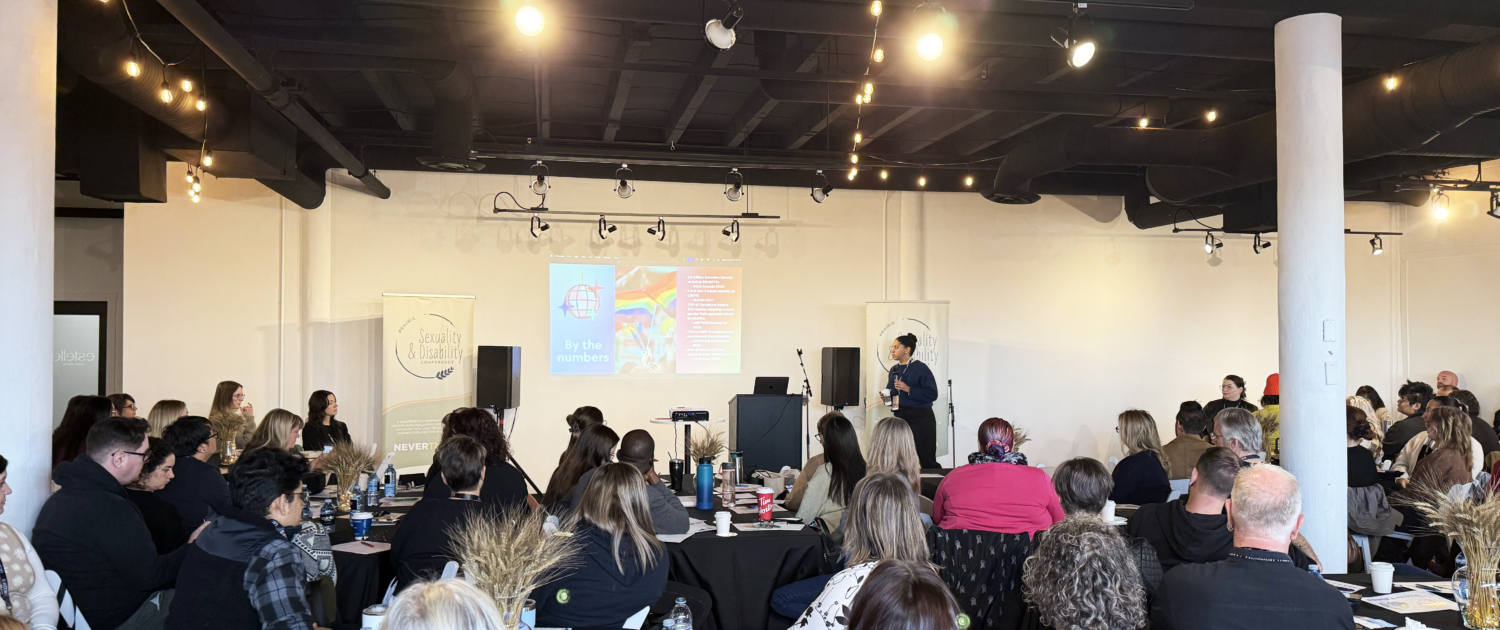
At this year’s Prairie Sexuality & Disability Conference, day two keynote speaker Dr. Karyn Harvey delivered a deeply moving and hopeful message grounded in humanity, connection, and rights. Her session, Love, Sex, and Human Rights, invited attendees to re-examine the way support is structured and to centre something essential: every person deserves real love, real intimacy, and real belonging.

Dr. Harvey opened with a powerful reminder that loneliness is not simply an emotion – it is a public health crisis. Drawing on research highlighted by the U.S. Surgeon General, she noted that chronic loneliness can pose a health risk comparable to smoking up to 15 cigarettes a day. It increases the likelihood of heart disease, stroke, and dementia. Neuroscience shows that exclusion even activates the same part of the brain associated with physical pain.

“We are biologically wired to connect,” she explained. When people experience isolation, exclusion, or a lack of meaningful relationships, the impact can be traumatic – especially for those who have experienced lifelong marginalization or institutionalization.

Loneliness as Trauma and Why Safety Alone Is Not Enough

Throughout her decades of work, Dr. Harvey has seen how many people experiencing disabilities carry layers of complex trauma, often linked to rejection, segregation, or the loss of meaningful relationships. And while support systems often focus on protection and safety, she urged the audience to recognize that safety is the baseline, not the goal.

People deserve the opportunity to build friendships, explore dating, and form chosen family. Yet, for many, their closest connections are with paid staff – not because staff are unkind, but because the system hasn’t always created space for natural, unpaid relationships to develop.

Meaningful connection, she emphasized, is not a luxury. It’s a human right.

Stories of Connection, Grief, and Possibility

Dr. Harvey shared several deeply personal and memorable stories – real examples of what becomes possible when people are supported to build relationships, and what is lost when they are not.

Christine & Derek

After the death of both parents, Christine withdrew from daily life. With grief support, community programming, and renewed connection, she began rebuilding her confidence. When she joined the singles group, she ultimately gravitated toward Derek – not her “assigned match” – and the two found a relationship that became a central source of stability and healing in her life.

Hinton & Mary

Hinton and Mary spent 30 years sitting beside each other at their day program in a state-run institution. They were known to everyone as a couple – but had never been supported to go on a real date, spend an evening together, or share a weekend.

At the first formal singles event Dr. Harvey’s team organized – a lively evening with a party bus, formal outfits, dinner, and dancing – they finally had their first real date. Hinton arrived in a tux and top hat; Mary wore a beautiful gown. They danced, held space for one another, and radiated joy.

“It was their first date,” Dr. Harvey said. “Their first date in 30 years.”

Their story became a touchstone – a reminder of what happens when systems gatekeep love.

Dan & Maria

Dan and Maria met at work and fell in love, though family fears initially kept them apart. With compassionate persistence and support, their families eventually embraced their relationship. They dated for several years before marrying – fully, legally, with intention.

Dr. Harvey described how their relationship sustained them, even through job loss and the stress of the pandemic. And when Maria later developed early-onset dementia, Dan became her source of comfort and strength. “I’ll never leave you,” he told her at a medical appointment. “I’ll be here for you.” Their story illustrated the fullness and dignity of long-term partnership.

Tamika: Loneliness as Vulnerability

Dr. Harvey also shared the story of Tamika, a woman who survived sexual assault. The root vulnerability, Dr. Harvey explained, was not disability – it was loneliness. For years, Tamika had told her team the same goal: “I want a boyfriend.” When that desire wasn’t supported, she sought connection where she could find it, without the guidance or safety she deserved.

Her story underscored an essential truth: connection is prevention.

Identity, Autonomy & the Role of Supports

Drawing on the work of Andrew Solomon and Erik Erikson, Dr. Harvey explained how people develop identity through both their families of origin (vertical identity) and their chosen communities (horizontal identity). Many people with disabilities experience disrupted vertical identities and lack opportunities to build horizontal ones, leaving them without a clear sense of who they are or who they belong to.

This, she emphasized, is where support matters most. Staff should not be someone’s primary relationship or surrogate family. Instead, they can be coaches and facilitators of connection, helping people build skills for communication, confidence, boundaries, and relationships.

“We help people with daily living tasks every day,” she said. “We can also help them build the skills for love.”

Choice, Rights & Modern Connection

Dr. Harvey challenged the sector’s tendency to talk about “choice” while only offering limited, controlled options. Real choice means real possibilities – dating, friendships, online connection, and the ability to explore relationships freely and safely.

She encouraged embracing modern tools – including dating apps designed for people with disabilities – while also prioritizing safety, autonomy, and informed consent. “Why shouldn’t people with disabilities use the apps that helped my own children meet their partners?” she asked.

A Human Right — Not a Privilege

At the end of her keynote, Dr. Harvey spoke from her own life: love has healed her, sustained her, and shaped who she is. She reflected on how fortunate she was to have had opportunities for intimacy and partnership.

“I had that right,” she said. “I had that opportunity. And everyone deserves it.”

Her message aligns deeply with COR’s values: people flourish when surrounded by authentic relationships, natural supports, and opportunities to connect in ways that are meaningful to them. Love, intimacy, friendship, and belonging are not extras. They are human rights – and they must be central to how we support people, always.
Intersecting Identities: Understanding Disability, Gender & Sexuality with Natalya Mason

At the 2025 Prairie Sexuality & Disability Conference, keynote speaker Natalya Mason – consultant, social worker, and sexual health educator – opened day one with a deeply informative session exploring how disability, gender, and sexuality intersect in people’s lives. Her presentation invited attendees to rethink long-held assumptions and to approach identity with curiosity, humility, and respect.

Natalya began with a clear message: every person has a gender identity, a sexual orientation, and a way they express themselves – including people with disabilities. Yet social narratives often deny or minimize this truth. Cultural myths, ableism, and queerphobia shape the way people are seen, and these layered biases can deeply affect self-expression, autonomy, and well-being.

A Framework Rooted in Liberation, Justice & Sex-Positivity

Natalya grounded her keynote in three guiding frameworks: theory as a liberatory practice, reproductive justice, and sex-positivity.

She described theory as a liberatory practice as an invitation for everyone – not just academics – to examine the world around them and imagine something better. When marginalized people are given space to reflect on their experiences, she said,

“the closer we get to collective liberation and freedom for everybody – and to a world where they have the freedom to thrive, and the freedom to love who they want to love and love how they want to love.”

Reproductive justice, drawn from Black women’s organizing, reminds us that people have the right to have children, not have children, and raise children in safe and healthy communities. For Natalya, this framework naturally includes 2SLGBTQ+ people and people with disabilities, and links sexual health to broader struggles against racism, poverty, and state violence.

Sex-positivity, she added, means recognizing sexuality as an “enhancing part of life” and working not only to prevent negative experiences but to “produce ideal experiences for people, instead of solely working towards preventing negative experiences.”

Language, Power & Identity

A central theme of the keynote was language as a tool of power. Natalya noted that power “often maintains itself by keeping other identities or other experiences silent, and it will literally do that by not providing people the language to talk about something.”

Many of the terms used to describe gender, sexuality, and disability may feel new to some audiences – not because these experiences are new, but because people have been discouraged from naming them. Natalya encouraged participants to keep learning, ask questions, and follow the language people choose for themselves.

She walked through her “Identity Pal” tool, which helps break down identity into:

  • Gender identity (who you know yourself to be)
  • Gender expression (how you present to the world)
  • Sexual orientation (who you love or are attracted to)
  • Biological sex (chromosomes, hormones, anatomy)

These elements are related but distinct – and understanding that difference is key to offering respectful support.

Gender & Disability as Social Constructs

Natalya spent time unpacking the idea of social constructs – systems humans create, maintain, and can change. Gender is one of them. Using examples like the history of pink and blue clothing for babies, she showed how norms around “masculine” and “feminine” shift over time.

She also challenged the idea that biological sex is simple, noting that there are many intersex variations. “People tend to think that those conditions are really, really rare,” she said, “but there are about the same number of people in the world who are intersex as there are people who are born redheads.”

Disability, too, can be understood socially: rather than seeing a “broken body” that needs to be fixed, the social model of disability asks how environments, attitudes, and systems create barriers – or remove them. Curb cuts, Braille, and accessible design are all examples of how society can shift responsibility away from the individual and toward collective inclusion.

Intersections, Myths & Compounded Barriers

Drawing on the concept of intersectionality, Natalya talked about how identities combine and compound. Her experience is not just about being a woman, or Black, or queer, but about being a queer Black woman – and how those layers shape her life. Similarly, people who are both experiencing disability and part of the 2SLGBTQ+ community can face higher rates of discrimination, mental health challenges, and barriers to accessibility.

She named common myths about disability and sexuality – like the idea that people with disabilities are asexual, necessarily heterosexual, or unable to understand their own gender or orientation – and connected them to old, harmful narratives about queer people more broadly.

This isn’t theoretical: it affects who gets information, whose relationships are taken seriously, and whose rights are respected.

Allyship as Action

Natalya closed with practical guidance on allyship, emphasizing that good intentions are not enough. “All of us are accountable to both our intentions and the impacts of our actions,” she said. “Ultimately, the impact matters more than the intent.”

She encouraged participants to:

  • Use people’s chosen names and pronouns
  • Practice gender-neutral language
  • Avoid making assumptions about gender, sexuality, or disability
  • Correct themselves proactively when they make mistakes

“The term ally – think about that as a verb, not a noun,” she added. “You don’t just get issued an ally card and then you never have to renew it. Allyship is something that you should be actively engaged in and always working on.”

Natalya closed with a quote from bell hooks, reflecting on queerness as “being about the self that is at odds with everything around it, and has to invent and create and find a place to speak and to thrive and to live.” For many people with disabilities and queer people, that description resonates deeply.

Her hope – and the hope of the conference – is that we build communities where people no longer have to fight for a place to exist, but are supported to explore, express, and celebrate who they are with dignity and pride.

WorkSafe Saskatchewan celebrates workplace safety leaders

Saskatoon, Sask., May 21, 2025 – Today, WorkSafe Saskatchewan recognized safety leaders from around the province at its 2025 Safe Worker and Safe Employer Awards. WorkSafe Saskatchewan, an injury prevention and workplace safety partnership between the Saskatchewan Workers’ Compensation Board (WCB) and the Ministry of Labour Relations and Workplace Safety, presented these awards in Saskatoon as part of the WCB’s Compensation Institute event.

“At WorkSafe Saskatchewan, we believe that creating safer workplaces starts with strong leadership and personal commitment,” said Kevin Mooney, the WCB’s vice-president of prevention and employer services. “This year’s Safe Worker and Safe Employer Award winners exemplify what it means to make safety a core value, not just a set of rules. Through their dedication, passion and innovation, our winners are setting new standards for safety and well-being in our province. We are pleased to recognize their outstanding efforts in making Saskatchewan a safer place to work.”

2025 Safe Worker Award winner

Sandee Jordon, a customer service representative at SaskEnergy, has been named the 2025 Safe Worker Award winner. Known as “Safety Sandee,” Jordon has spent 17 years championing a culture of safety at SaskEnergy, making safety engaging, memorable and a part of daily life.

“Safety Sandee started as a fun nickname, but it became so much more,” said Jordon. “Life is so precious and we cannot waste one minute of it. Working safely is something every person should do and I’m proud to help make that happen here.”

Beyond physical safety, she has also been a strong advocate for mental health initiatives, ensuring a holistic approach to workplace well-being. Her passion, leadership and community impact have made her a true role model for safety at work and beyond.

2025 Safe Employer Award winner

Creative Options Regina (COR) has been named the 2025 Safe Employer Award winner. COR, a Regina-based charitable organization supporting youth and adults experiencing disabilities and mental struggles, was recognized for its outstanding commitment to fostering a culture of psychological health, safety and belonging.

“Nurturing a culture of belonging is at the heart of our safety efforts,” said Michael Lavis, executive director of COR. “If we want the people we support to thrive, we must first focus on caring for the care providers.”

Rooted in the philosophy of gentle teaching, COR prioritizes caring for its nearly 400 employees through comprehensive mental health training, stress management support and initiatives that nurture strong relationships and a sense of community. By focusing on care provider well-being, COR ensures the people they support can thrive.

Each year, WorkSafe Saskatchewan recognizes individuals and organizations for the Safe Worker and Safe Employer Awards who are nominated by their workplace peers and colleagues. The winners are chosen by two committees consisting of representatives from WorkSafe Saskatchewan, the Saskatchewan Federation of Labour, the Saskatchewan Safety Council and the Canadian Society of Safety Engineers. These awards are a testament to the ongoing efforts to cultivate a safer work environment across Saskatchewan.


For more information about the WorkSafe Saskatchewan Safe Worker and Safe Employer Awards and the nomination process for the 2026 awards, visit worksafesask.ca/resources/awards.

Recognized by Excellence Canada as a Healthy Workplace Month Great Employer

COR is proud to be named a 2024 Canada’s Healthy Workplace Month Great Employer, by Excellence Canada. 

In a letter from Sean Slater, President, Excellence Canada, COR was commended for our efforts to nurture a physically and psychologically safe workplace:

Congratulations on prioritizing the vital work of nurturing a physically and psychologically safe and healthy workplace and for the commendable actions you are taking as an employer to achieve it. Our adjudication team was impressed with your work in the following key areas of focus:

  • Physical Health
  • Mental Health
  • Social Health
  • Community


Excerpt from Excellence Canada’s Official Announcement:

We’re excited to celebrate this year’s amazing organizations that have gone the extra mile to make their workplaces healthy, safe, and welcoming for everyone. These award winners have shown real leadership in creating environments where both physical and mental well-being are top priorities. Their efforts stand out accross the four pillars of workplace wellness, and it’s inspiring to see how they’re making a difference for their teams everyday.

Kudos to all the recipients– you’re setting an awesome example for workplaces across Canada!

View the full list of 2024 Award Recipients.


2nd Annual Prairie Sexuality and Disability Conference

COR is proud to host the 2nd Annual Prairie Sexuality and Disability Conference, in partnership with Saskatoon Sexual Health and Inclusion Saskatchewan. Join us in Saskatoon, Saskatchewan on October 18-19, 2023.

For more information, visit: https://nevertmi.ca/psdcon/


Sexuality and Disability Conference 2022

Creative Options Regina, Saskatoon Sexual Health, and Inclusion Saskatchewan are pleased to announce an upcoming conference supporting sexual health and wellness for people with intellectual and developmental disabilities and their networks.

Date: October 7, 2022

Time: 9-4pm

Location: University of Regina College Ave. Campus


REGISTRATION IS NOW OPEN! (Click to Register)

Space is limited, so register early to secure your spot.

This is an exciting opportunity for support workers, caregivers, family members, community-based organizations, researchers, students, health care professionals, self-advocates, or anyone interested in learning more about sexuality and disability.


Proudly supported by the Community Initiatives Fund and the Saskatchewan Prevention Institute!

COR Receives Canada’s Healthy Workplace 2021 Great Employer Award

COR has once again received Canada’s Healthy Workplace Great Employer Award by Excellence Canada and Canada Life. We are so very proud of our COR family and tremendously grateful to everyone who has supported our effort in building a healthy workplace! Read about the award below:

Excellence Canada announces the 2021 Canada’s Healthy Workplace Month® Great Employers

TORONTO, Dec. 06, 2021 (GLOBE NEWSWIRE) — Excellence Canada is pleased to announce the 2021 Canada’s Healthy Workplace Month® Great Employers. These organizations are being celebrated for their planning and actions to foster physically and psychologically safe and healthy workplaces, striving to continually improve across four main areas of focus, namely:

Physical Health

This element of a healthy workplace refers to how well an organization supports employees to develop and maintain healthy behaviours (exercise, nutrition, sleep, etc.) reduce unhealthy/risky habits and make optimal use of health care opportunities. It also refers to workplace due diligence regarding Occupational Health and Safety (OHS) and the management of workplace influences that may contribute to injuries, disabilities and/or fatalities. Facility design, including air quality, noise, lighting, and other physical workplace factors are also important aspects that impact employee physical health and well-being.

Mental Health

This element of a healthy workplace refers to how the organization encourages a supportive workplace culture – the foundation of a healthy workplace. This element speaks to how the culture encourages respect, trust, support, and inclusivity. It refers to communication styles and patterns of relationships and values that influence employee health, safety, and well-being.

Social Health

Social well-being in the workplace reflects employee relationships with coworkers, interactions with management, and a sense of belonging within the organization as a whole. It is a measure of an employee’s interpersonal relationships both inside and outside of work and includes aspects such as connectedness, collaboration, recognition and rewards, engagement, influence, growth and development, and intellectual health.

Community

Being a socially responsible organization empowers employees to leverage corporate resources at their disposal to do good. Formal social responsibility programs boost employee morale and productivity in the workforce. This element of a healthy workplace refers to the interrelationship between the workplace, the community, and employee health, safety and well-being, including the way organizations are involved in the community, support environmental stewardship, economic responsibility, and social justice; and how employees are encouraged to participate, volunteer, and ‘give back’ to the community.

This year’s recipients are, in alphabetical order:

AGS Rehab Solutions Inc. Mississauga ON
CanmetENERGY-Ottawa, Natural Resources Canada Nepean ON
CHEO (Pediatric health care and research centre) Ottawa ON
Connecting Care & Points West Living Edmonton AB
Creative Options Regina Regina SK
Hamilton Health Sciences Hamilton ON
Health Standards Organization (HSO) Ottawa ON
Lethbridge College Lethbridge AB
McMaster University Hamilton ON
Saskatchewan Blue Cross Saskatoon SK
Unbounce Vancouver BC
WorkTango Toronto ON

Find out what it takes to be a Canada’s Healthy Workplace Month® Great Employer

About Excellence Canada
Excellence Canada is an independent, not-for-profit corporation that is committed to advancing organizational excellence across Canada. As a national authority on Organizational Excellence, Healthy Workplace®, and Mental Health at Work® awards, Excellence Canada provides excellence frameworks, standards, and independent verification and certification to organizations of all sizes and in all sectors. It is also the custodian and adjudicator of the Canada Awards for Excellence program.

“Canada’s Healthy Workplace Month” , “Healthy Workplace”, and “Mental Health at Work” are Registered Trademarks of Excellence Canada.

Safety Centered Leadership Award Recipient — Thank you Service Hospitality!

Earlier this month, we were honored by our provincial safety association as the recipient of their annual Safety Centered Leadership Award. We are beyond grateful for Service Hospitality’s continued support and guidance in assisting us in keeping our COR family safe! Read their article below:

Our 2019 Safety Centered Leadership Award Goes To…

Michael Lavis from Creative Options Regina!

“Thank you Service Hospitality! I am humbled by this recognition. People are at the heart of our organization — our approach to safety is holistic ensuring everyone feels safe and valued:  employees, people supported, families, partners, volunteers and stakeholders — everyone! Our success has and continues to be, the result of a highly committed, compassionate, creative group of people that make up the COR family. Even during these challenging times, we are growing stronger together, rallying as one and discovering innovative ways to build community while adhering to strict health and safety protocols. We are determined to challenge the status quo and demonstrate that care can be done differently. We are so grateful for the support and guidance you — Service Hospitality — provide us and look forward to continued partnership into the future. Thank you.”

This year we presented the Executive Director of Creative Options Regina, Mr. Michael Lavis, with Service Hospitality’s most prestigious award, the Safety Centered Leadership Award. Michael’s commitment to health and safety doesn’t arise out of needing to meet legislated requirements – he truly believes a healthy and safe workplace is a productive and sustainable one. While the health and safety of his staff at Creative Options is a priority, he also demonstrates a passion for the safety of all workers in Saskatchewan.

Creative Options Regina, and Michael himself, are known for starting trends – not following them. He thinks outside the box and offers various resources to his staff to support their physical and mental health. An example of this is when Michael realized, although nutrition planning was provided through their employee benefits package, it was not being utilized by staff. So instead of waiting for staff to seek out nutritionist services, he brought the nutritionist to the office so the support was easily accessible to all employees.

Michael has also shown a passion for health and safety by…

  • Being a valued member of Service Hospitality’s Mental Health Best Practice Group, where he has led in the area of psychological health and safety in Saskatchewan community organizations.

  • Not being afraid to challenge big ideas and make insightful recommendations in front of the Health & Safety community. This shows he is not a complacent bystander, but an active participator.

  • Has sat on the Service Hospitality board of directors for 3 years and advocates for what he believes in and what is right in the community and industry.

  • Being heavily involved with Youth Safety Education Day by sponsoring and attending YSED events, and joining forces with Service Hospitality for Smile Cookie Day at Leboldus High School in 2019.

Michael is passionately committed to strengthening the disability services sector in Saskatchewan and to forge out new beginnings for the province’s most vulnerable citizens. He understands that the business of caring for people starts with the wellness of its own employees.

Thank you to Michael for being a leader, setting an example, and always breaking through the glass ceiling of health and safety in our province and beyond its borders!

View the article on Service Hospitality’s website.


True Clean Solutions and COR: Partnering to Keep the COR Family Safe

How True Clean Solutions helps group homes through the COVID-19 Pandemic

Because you can never do too much for the people you care for most.

For Creative Options Regina (COR), that includes staff and residents they work with daily. In fact, they are considered family, which is why Michael Lavis, executive director at COR, took an extra step to ensure their health and well-being during the COVID-19 pandemic.

With cleanliness and sanitization practices now top of mine, COR enlisted the services of True Clean Solutions to provide an additional layer of disinfection in each of the homes where caregivers and residents interact.

COR provides in-home support through gentle teaching for adults and youth with disabilities and mental health struggles.

“We felt it was important to enhance the safety, the feeling of safety and the cleaning protocols in each of our homes,” Lavis explained. “Disinfecting and sanitization are absolutely critical, particularly during the pandemic. It is our responsibility to do everything that we can to keep our employees and the people we care about safe.”

In doing so, in-home managers and residents gained a greater peace of mind.

True Clean Solutions uses a product that is approved by Health Canada. Its technicians have received thorough instruction on how to safely enter and exit a home or business and they relay that information to clients prior to product application.

“(True Clean Solutions) took the time to explain to us what this product is,” Lavis said. “They walked us through the entire process. They supported our employees by providing them with the necessary information and made sure everyone was comfortable with their work prior to commencing their work.”

Being transparent and forthcoming with information related to the disinfecting process and the products used solidified Lavis’ confidence in proceeding with the service.

“Their level of customer service in helping to ensure that people felt comfortable with the product they were going to be using in their homes was something that really stood out to me,” Lavis said.

If the pandemic has taught us anything, it’s to be more mindful of cleanliness and personal hygiene and how they affect our overall health.

Visit truecleansolutions.com to learn more about their service and to receive an online quote.

Full Article Available Here.


Service Hospitality Presents… Operating During COVID-19 – LIVE Panelist Discussion

Join Service Hospitality on Wednesday, June 3rd 1:00 – 3 pm (CST) for a FREE LIVE Virtual Event on Operating during COVID-19, presented by Service Hospitality!

“We have heard your concerns and struggles about operating during COVID-19. Service Hospitality is bringing together a panelist of industry leaders to share how they have operated their organizations throughout the pandemic. If you are struggling to navigate the uncertainty of returning to work and what comes with operating an organization and employees during COVID-19 you are going to want to tune in!

Our panelists are here to share with you their stories of how they have operated during this time and how they will continue to operate after COVID-19. They will share insights, tools and resources with you on how you can continue to move forward during these uncertain times.” – Service Hospitality


Line up of special guest speakers includes:


Liz Horvath, B.A. Sc., CRSP
Manager, Workplace Mental Health
Opening Minds, Mental Health Commission of Canada

https://www.mentalhealthcommission.ca/English

Liz joined the Opening Minds Team of the Mental Health Commission of Canada in August 2019, where she leads the development and delivery of the Workplace Mental Health Program. For nearly 25 years, Liz has been guiding organizations throughout Canada to achieve better business outcomes through the implementation of occupational health and safety management systems.


Jim Bence
President & CEO
Saskatchewan Hotel & Hospitality Association

www.skhha.com

Jim has a strong passion for safety and brings expert advice to the table, specifically when it comes to the hotel and service industry. He has played a critical role in the establishment and growth of the Hotel Best Practice Group as well as the designation of a Youth Safety Education day in the province. He will discuss more on the hotel industry and the impact it has felt during this time.


Kevin Danchuk
Director of Health & Safety
Athabasca Catering Ltd. Partnership

www.athabascacatering.com/

Kevin brings a wealth of experience to setting strategy, driving execution and creating best practices for safety, health, and the environment and quality services. He is truly dedicated to providing a safe workplace for all employees, wherever the location and whatever the job. Kevin will be discussing the challenges of operating during the pandemic as they are considered an essential service and directly support the mining industries up North.


Phyllis O’Connor
Executive Director
Canadian Mental Health Association – SK Division

sk.cmha.ca/

Phyllis is the Executive Director at the Canadian Mental Health Association; she has been with CMHA for over 20 years. Phyllis is an advocate for mental health and works towards reducing the stigma that is associated with mental illness and mental health. She will be discussing how COVID-19 has impacted our mental health and shedding light on the emotions and uncertainty that comes with it while providing tools and resources to navigate it.


Michael Lavis
Executive Director
Creative Options Regina

creativeoptionsregina.ca/

Michael is an accomplished, passionate leader who puts safety and the care of his employees first. He has extensive experience when it comes to organizational management, capacity building and training. Michael is passionately committed to strengthening the disability services sector in Saskatchewan and to forge out new beginnings for the province’s most vulnerable citizens. Michael will be discussing how to work and feel safe while providing essential care.


Mark Von Schellwitz
Vice President, Western Canada
Restaurants Canada

https://www.restaurantscanada.org/

Mark is a leading expert in the restaurant industry and brings over 20 years of experience forward. He is passionate about the industry he works in and strives to better it through conversation and collaboration. Mark has worked closely with many organizations to help improve the industry and doesn’t believe it stops there. Mark will be discussing safety around take-out and delivery options with restaurants during this time.


“As we look towards life after the worst of the coronavirus (COVID-19) pandemic has passed, business recovery will be paramount. Service Hospitality has put together a Return to Work Plan Guide for Service and Hospitality Industry employers to assist them and their employees in returning to work safely. The guide has been developed to give employers a series of best practices and other necessary measures that will help to minimize the risk of exposure to the virus.” – Service Hospitality

Visit Service Hospitality’s website for more information.