WorkSafe Sask. connects employers with psychological health expertise
/in Blog, Health & Wellness, Media/by Michael

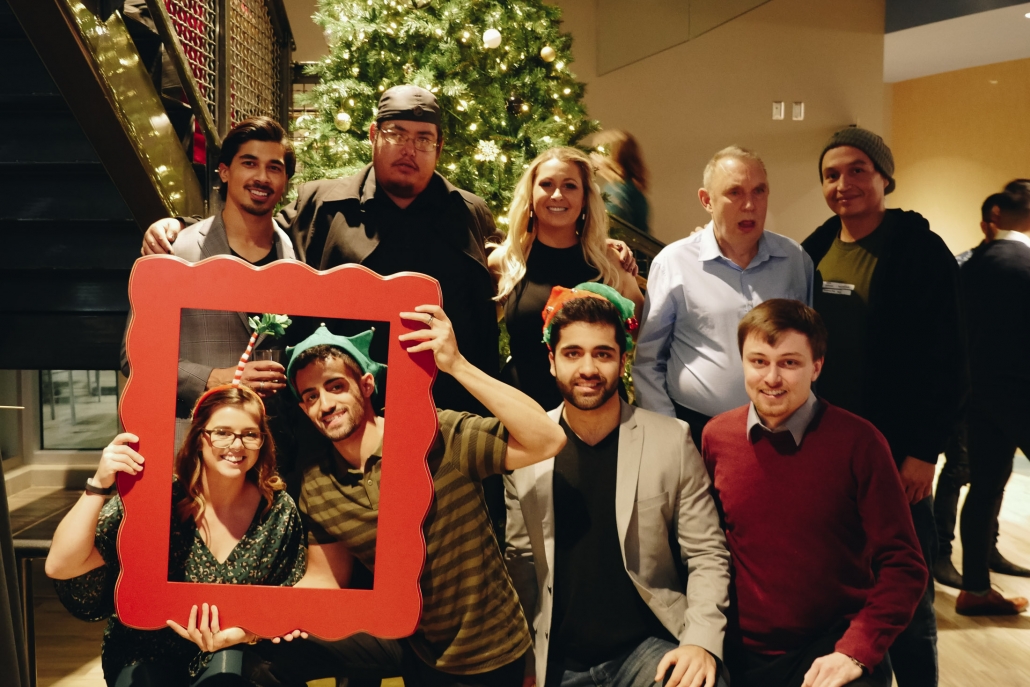
COR 100 Acts of Kindness 2019
/in Blog, Events, Gentle Teaching/by jephValue. It’s something that doesn’t need to be earned. We all have value. Within our own circle of support that value is magnified and can be easily recognized. But every once in a while a person we may not even know does something special and it takes us back. Maybe they spark up a conversation with us at the coffee shop when we least expect it, or maybe they hold open a door or plug our parking meter without us even knowing. How do we recognize and give thanks to the people that brighten our days?
100 Acts of Kindness is back and we are roaring into 2019 with all of the momentum from last year’s campaign! 2018 highlighted some of the unsung heroes of our city who make the ordinary extraordinary, and make those impossible tasks, possible! 100 Acts of Kindness 2019 is going to take last year’s nominations to new heights and continue to spread the love in different ways. Our Street Team is adding new members each week as we invite last year’s recipients to pay the love forward to new unsuspecting superheroes. Join us this winter in turning our snowball into an avalanche!
![]()
Nominate a community hero today!
2019 Highlight Reel
2019 Launch Video
Week 1
Week 2
Week 3
Week 4
Week 5
Week 6
Week 7
Week 8
Week 9
Week 10
Nominate someone special in your community
Take a peek at who we celebrated in our 2018 campaign here: COR AOK’s 2018.
Royal Roads University article on innovation features COR
/in Blog, Media/by Michael“These solution-seekers want to tackle problems head on. This is not your traditional way of doing business.”
When you’ve got a big question with no clear answer, it’s time to innovate.
That’s what drew Glenda Tarnowski to Royal Roads Graduate Certificate in Corporate Social Innovation program.
As the director of professional practice for the College of Licensed Practical Nurses of Alberta (CLPNA), Tarnowski provides leadership support to licenced practical nurses (LPNs) in the delivery of safe, patient-centered care.
As the healthcare landscape changes and an aging population increases, so does the need for specialized and responsive healthcare.
She, along with the leadership team at CLPNA asked themselves, “How do we best prepare LPNs to meet the care needs of the changing demographic?”
Social innovation was made for questions like these, says Colleen McCormick, who teaches in the graduate certificate program and brings the principles and practices of social innovation alive as director of Connected Communities BC in the Ministry of Citizens’ Services.
“Social innovation is about co-creating solutions with the people who are living the problems,” she says. “Bringing diverse people and sectors together to radically collaborate on addressing a complex issue at the systems level is what makes the field of social innovation so fascinating to study and play in.”
McCormick says social innovators are driven by social impact, so they don’t care much for “Band-Aid” fixes.
“These solution-seekers want to tackle problems head on. This is not your traditional way of doing business.”
The six-month program is offered through Professional and Continuing Studies and is designed for those looking to incorporate social concerns and solutions into the very fabric of their organizations—whether in government, business or the non-profit sector.
Michael Lavis is the executive director for Creative Options Regina (COR), a non-profit organization that provides supports for adults and youth experiencing disability. He registered for the program to help him identify blind spots within the organization.
“The program is helping us better understand what drives innovation and to dissect and build a strong, healthy vibrant organization that has value for stakeholders,” he says.
Lavis says COR realized the benefit of focusing not only on the people who access supports, but also on caregivers. He says COR knows a strong, vibrant care team is key to providing exceptional care.
“We intentionally shifted our focus and looked at who all of our stakeholders are and what we’re doing to nurture those relationships,” he says. “The program is really helping us frame that.”
Assoc. Prof. Robert Mittelman, one of the program designers, says organizations are increasingly looking to build social needs into their business models.
“Corporate social innovation is about looking forward. It’s about using an intervention to address a social issue, whether it’s a new product, service or a change to how your organization operates,” Mittelman says. “It’s about putting that social issue at the centre of your business strategy.”
The blended program includes three applied courses that introduce participants to the foundations of corporate social innovation, design thinking and the principles of measurement and scale.
“Students go back to their organizations the next day, after a new module is released, and build change right from the start of the program,” Mittelman says.
August 28, 2018
By: Lisa Weighton
Two organizations prove that nice guys can finish first!
/in Blog, Employment, Media, Stories/by MichaelMastermind Toys and Creative Options Regina
The result? These two organizations have earned exemplary reputations with the communities they serve and enjoy unusually high staff retention rates for their industries.
Mastermind Toys
Mastermind has a unique philosophy for selling children’s toys and books. By fostering an educational approach, the company enriches not only the customer experience but the employee experience as well. In fact, they enjoy an average employee tenure of close to seven years — an almost unheard-of retention rate in retail stores.
Ryan Thorson, store manager of Mastermind Toys Terra Losa in Edmonton, Alberta, believes that the company’s workplace culture promotes a fun and inviting atmosphere that lives up to their motto: “We take play seriously.”
“I wanted to find a company where I could not only pursue career advancement,” Thorson says, “but also have it be a place that shares my values… a family-like atmosphere and a track record for treating its employees with fairness and respect.”
Mastermind was originally opened in 1984 by brothers Andy and Jon Levy in Toronto to sell educational software to families excited about their new home computers. Two years later, they opened a store in the Ontario Science Centre. Now with 60 stores across the country, and growing, Mastermind’s CEO, Jon Levy, understands the impact that his company can have on the communities where the stores are located.
In 2015, the company launched a partnership with WE (formerly Free the Children), a charity that supports youth education in Canada and overseas. In 2016, Mastermind stores raised $400,000, but the initiative isn’t just about giving back to the community; it’s also about engaging employees.
“Anne [Baston, vice-president of marketing] and I started to talk about the charitable side of our business and what we could do to broaden our horizons from the standpoint of how our employees were engaged charitably,” says Levy.
After much deliberation and brainstorming, the company selected WE. Its educational mandate plays well with Mastermind’s objective to sell toys that educate.
When they launched the initiative, many of the company’s younger employees were already familiar with WE from their school days. Selecting a charity with broad appeal, and that their employees were already comfortable with, made for a smooth, easy transference of enthusiasm from the top down. To drive home the impact that they are making through their charitable efforts, Mastermind takes managers of the stores that raise the most funds to Kenya on a yearly basis.
“Behind every great manager is up to 60 employees that get that store to greatness. Two store managers went with me and my wife, Karyn, who also works in the organization, the first year. The rest of their teams back in Canada got a fantastic reward package … Even though they didn’t go on the trip, they were highly congratulated with lots of prizing.”
Levy is always on the lookout for ways to connect with his employees. He started creating videos for the staff that, in addition to educating about a product, also introduces him to all employees in a playful, easygoing manner. This, in turn, helps break down uncomfortable hierarchy in the organization.
“Our inner kid, the way we like to play and what we think resonates with the community, really comes through in a personal way [with this] video program… so, it’s kind of fun,” he says. “When I visit stores, the newly hired staff say, ‘I know you, you’re on the video.’”
“Every store you go into, whether it’s out in B.C. or in Nova Scotia, it feels like family,” says Baston. “There’s a community feeling to all of the stores. Despite the fact that we’re growing… Mastermind does a really good job of hiring people with similar values. You can feel that when you walk into the stores, into the home office. I think that makes it very different from other retailers.”
Creative Options Regina (COR)
A culture of gentleness is woven into all aspects of the organization at COR — not just in how the individuals and families COR serves are treated, but in the people it hires and how each employee is mentored.
Michael Lavis, executive director, says that their method of “gentle teaching” is not specific to disability but rather can be applied to all people constructing supports for marginalized populations. “There are a handful of organizations — I think there are four of us now in Canada — working on this philosophy… which is really the foundation, the bedrock of the work that we do. And this is rooted in whether or not a person feels safe and valued — putting relationships at the core of care giving,” says Lavis.
The company is the seventh-largest care provider in Saskatchewan and employs 200 staff who serve 20% of the most challenging cases in the province’s service delivery system. Like other service providers, COR is contracted by the government to provide personalized support services for people with disabilities. What differentiates them from other providers, though, is the intentional shift they made to focus on their employees — the caregivers.
“By making that shift — by making sure we are nurturing our caregivers and that our employees are feeling cared for — what ends up happening is they give the utmost care to [our clients],” says Lavis. “So, it’s shifting the focus as an organization to our employees — to what the employee experience looks like, what the employee wants, what they need from us to feel supported and how we can really understand what is meaningful to our employees.”
Organizational culture is a popular topic these days, but Lavis challenges people to go one step further and work on shared values, as he feels that that has the greatest influence on culture. “What drives culture is value alignment. That’s something we’ve focused on, understanding the values of our employees … and where we see that alignment and shared common purpose,” he says.
In the Saskatchewan disability services sector the employee turnover rate was around 60% in 2015. By contrast, the turnover rate at COR has remained at a steady 9 – 14% since the company’s inception.
Creating a caring staff atmosphere is about understanding who is working for you and what is important to them. For most employees, a fair wage is critical. But for many that is only a small piece of a larger picture. There are other crucial factors, such as whether or not employees feel engaged and if their ideas and suggestions are listened to and valued. At COR, they have found that exploring employees’ passions and helping them bring those passions to life in the workplace is key.
“We have to have that conversation with our employees, because we need to know what it is that they want and need and whether that is something we are able to provide,” says Lavis.
Helping employees bring their passions into the workplace enables them to impart important life skills. For example, one COR employee who loves cooking offered to teach other employees to cook. As the average staffers’ age is 28, this is a skill that some of them may lack. COR helped the employee develop a monthly cooking class with regular attendance of 10-15 staff, who can now pass that skill onto COR clients.
Lavis says they plan to develop an art initiative next. The idea was brought to him by two employees who wanted to share their passion for art. “It’s a pivotal moment,” says Lavis. “A matter of us saying, ‘Yeah. I’d love to help you. How are we going to do this?’
“It’s easy to think of barriers of why they can’t do it. And that takes the wind out of their sails. But, by saying, ‘I love this idea. We just have to think it through a little bit more. Let’s talk.’ — Then, they are motivated and energized, and you know what? [Here we are now] developing an art studio. There were lots of barriers, but we have been able to work through [them] to be able to see it realized.”
Lavis believes that a customer-centric focus has actually harmed many companies. “People tend to focus on the customer and forget about their employees,” he says. “I think that, whether it’s a for-profit or not-for-profit business, if we want to provide the utmost care for those we are contracted to provide services to, that starts with us caring for our employees. If they feel well cared for, they are going to provide great care.”
Click here to view on the Your Workplace website.
COR featured on AMI: Our Community
/in 4to40, Blog, Gentle Teaching, Media, Stories/by MichaelIn August 2018, COR was featured in a documentary that aired to a national audience highlighting our approach to services. A special thank you to the AMI team and Halter Media for capturing our story so beautifully! We are very appreciative.
To learn more: https://www.ami.ca/category/our-community/media/creative-options-regina
People experiencing disability often don’t have the same options afforded to them as everyone else. Through personalized support services and the Gentle Teaching philosophy, Creative Options Regina aims to change that.
I have seen tremendous transformations in the people I support
/in Blog, Employment, Gentle Teaching, Stories/by MichaelI, Jusinda, have had the opportunity to work with people who each have their own unique abilities. I have been able to become creative in a variety of different ways to create a barrier free environment for the individuals I support. The training I received — Gentle Teaching and application has given me the tools to give value to relationships. I have come to have more compassion for individuals that have been in the system for most of their lives. It can be very complex; respect is not complex. Since I have been able to apply the skills I have acquired at COR I’ve come to realize our time and attention are our most valuable resources as people. So when we choose to focus our time and attention on people, and with that compassion, beautiful things can grow.

I have seen tremendous transformations in the people I support at COR with Gentle Teaching tools I have utilized. I have had the ability to learn from mistakes and grow through relationships. I have learned that relationships are not easy in this context, but I have chosen to give my time and attention to the individuals that I serve because I genuinely care about their progress and passions. I truly pride myself in being a part of the COR family, because COR is not your typical 9-5 job, as a support worker my job has taught me to be patient in the process of growth, and that growth is ongoing. The individuals I support at COR are my equals, my friends and the level of passion I see in them are what I look up to. They have shown me more about myself than I ever imagined. Gentle Teaching is effective and in line with my values about the approach taken when having a working relationship with individuals with varying abilities.
Jusinda
COR Family Member
Canadian Transit at the Forefront of Equitable Mobility
/in 4to40, Blog, Media, Travel Training/by MichaelYork Region Transit’s manager of Mobility Plus, Sharon Doyle, puts is as such: “Our passengers always come first, and we are built on a foundation of inclusivity. Everyone should have opportunity for independent and spontaneous travel, no matter their circumstances. When people have access to transportation, individuals and communities thrive.”

At CUTA, our mission is to inspire and influence the evolution of integrated urban mobility, and that includes equal access to mobility for people with disabilities. For this reason, we have chosen to highlight three outstanding projects with a focus on accessibility from our transit members, showcasing excellence and innovation in making Canadian urban mobility more equitable and available to all.
Regina Transit: Travel Training Program
Regina Transit is actively supporting people who experience disabilities by offering a program that shows participants how to use fixed-route transit service through its new travel training program. Paratransit typically does not allow people to travel with the utmost flexibility and spontaneity because trips must be booked in advance, and there are specific trip times to adhere to.


Using fixed-route transit enables people currently using paratransit to have another travel option. Regina’s program is unique because it is a partnership between the City of Regina, Creative Options Regina (a community-based organization supporting people experiencing disabilities), and the University of Regina’s 4to40 program.

People experiencing disabilities are hired to deliver the training creating meaningful employment. For more information go to the 4to40.ca website and click on the travel training tab.
View the Full article here: http://cutaactu.ca/en/blog-posts/canadian-transit-forefront-equitable-mobility
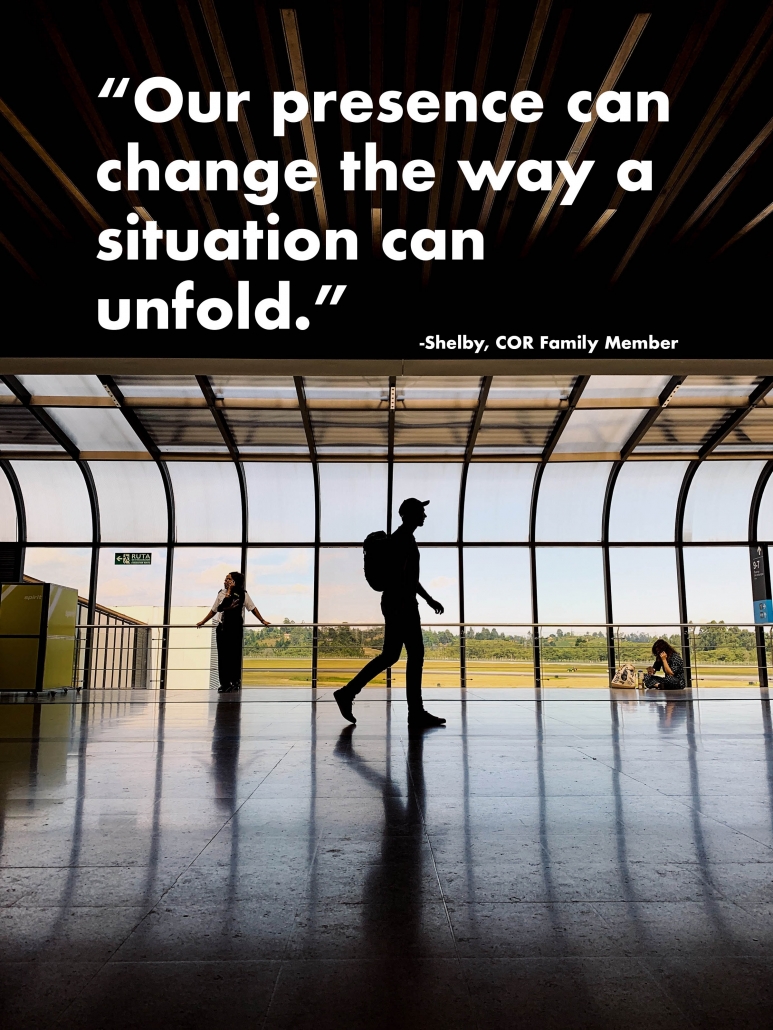
Supporting at COR has made me approach life at a slower pace and truly take in my surroundings
/in Blog, Employment, Gentle Teaching, Stories/by MichaelGentle Teaching has transformed the person I am and aspire to be by making me more personally aware of who I am and who I want to be. Through my time at COR I have truly learnt the meaning of empathy, as opposed to sympathy. It is easy to be sympathetic towards someone and just coat situations with nice words so everyone is happy; it’s another to understand why someone feels that way and put yourself in their position to see the entire picture from their perspective.

Supporting at COR has made me approach life at a slower pace and truly take in my surroundings and understand complex situations. It has allowed me to view problems from all perspectives to get a grasp on what the next step should be without making a rash, quick decision. We live in such a fast-paced society and sometimes forget to sit back and take it all in. The people I support have taught me how important friendships are and how valuable a good friend is. These relationships that have evolved over the years have truly become more than a “client” and “worker” relationship; I consider these people my family which is one of my favorite perks of being a support worker at COR. One of the girls I support said it best when she was standing up for another COR individual by saying, “she’s with COR, and COR is family.” This small, and relatively simple quote truly warmed my heart and sums up my time with this wonderful organization. My time at COR has truly allowed me to appreciate the little things in life like what a true friendship is.
-Shelby B.

Regina Leader-Post: ‘Champions of transit’: Reginans with disabilities will teach peers to ride the bus
/in 4to40, Blog, Inclusion, Media/by Michael‘Champions of transit’: Reginans with disabilities will teach peers to ride the bus
Dylan Morin will be one of four transit trainers who hope to help the city ease pressure on the Regina Paratransit system by teaching new skills.
Dylan Morin can get almost anywhere in Regina.
“I know the city like the back of my hand,” he said. “I know how to get to a lot of the stops.”
He’s been riding the city bus since high school, despite the challenges of an intellectual disability. On Thursday, he took the 18 from the University of Regina. Once the doors shut and the driver pulled away, Morin spoke in a soft, reassuring tone. Don’t be nervous, he offered, you’re not alone.
“There’s nothing to it,” he said. “As much as you need me, I’ll be there for you.”
Morin was showing how he teaches other people with disabilities how to ride the bus. He’ll be one of four transit trainers hired through a partnership between the city and Creative Options Regina, which are preparing to roll out a transit trainer pilot program this spring
“We’re the only transit system in Canada using this particular approach,” said Regina’s paratransit and accessibility manager, Lynette Griffin. “We’re utilizing people with disabilities, particularly people with intellectual disabilities, to do the training.”

She said the program will help Regina Paratransit users make the jump to conventional transit. It will also create paid employment for the trainers. The goal is to open up more flexible transit choices, all while saving the city money in the long run.
“If we can move some trips off, then we’ll have capacity in Paratransit to continue to meet our growing demand,” she said. “It will help Paratransit to manage our budget… for every trip on conventional transit, it’s a $20 saving.”
Those who learn to use buses won’t be barred from Paratransit. Griffin said she wants to avoid a “segregated system.” But she called conventional transit “a great second option” that can promote empowerment.
“It will give them the opportunity to travel through the community without having to book trips in advance,” she said. “You can come and go wherever you want, so there’s much more independence and flexibility.”
Creative Options Regina supports people with intellectual disabilities, and its CEO, Michael Lavis, is convinced that most of his clients would thrive on the bus. For many, only one thing stands in the way: Fear.
“People are nervous because they don’t know,” he said. “Sometimes people haven’t really been afforded the opportunity to learn.”
That’s why his staff looked for trainers like Morin, outgoing people with extensive bus-riding experience. They’re all part of the University of Regina’s Campus for All program. Lavis called them “champions of transit.”
“They know that transit system inside and out,” he said. “No fears, no apprehensions. They know where to go.”

Morin plans to use a staged process that will go from hands-on to hands-off as his students get the hang of the bus.
“It’s about getting individuals outside of their comfort zone,” he said.
At first, he’ll meet them at their home, walk them to the bus stop, show them how to read a transit map. He’ll sit right beside them as they look out for their stop. If all goes well, the next trip might be different.
“I wouldn’t sit with you on the bus like I did,” he explained. “I would give you a landmark to pull the bell at.”
By the end, Morin would be on standby, taking check-ins over the phone.
The program’s contract is still being finalized. But Lavis and Griffin are confident it will be up and running this spring. Griffin said all Paratransit users will be welcome to make use of the training, whether they have cognitive or mobility challenges.
Morin and his colleagues will be there to show them the way.
“They’re actually really excited about it and want to be champions for teaching others,” said Lavis. “That’s part of the magic.”